
There is a distinct kind of alchemy that occurs when cream meets stock. Unlike the clear, restorative qualities of Healing Bone Broths & Noodle Soups, the world of bisques and chowders is one of pure, unadulterated opulence. These are not merely meals; they are comforting embraces served in a bowl, characterized by their weight, their mouthfeel, and their ability to turn a simple dinner into a luxurious event.
While both styles sit firmly in the category of "thick and creamy," they offer vastly different experiences. Understanding the nuance between the elegant French bisque and the hearty American chowder is the first step to mastering them in your own kitchen.
The Great Divide: Bisque vs. Chowder
At a glance, a bowl of tomato bisque and a bowl of corn chowder might both look rich and inviting, but their lineages are distinct. The primary difference lies in texture and origin.
Bisque: The Smooth Operator
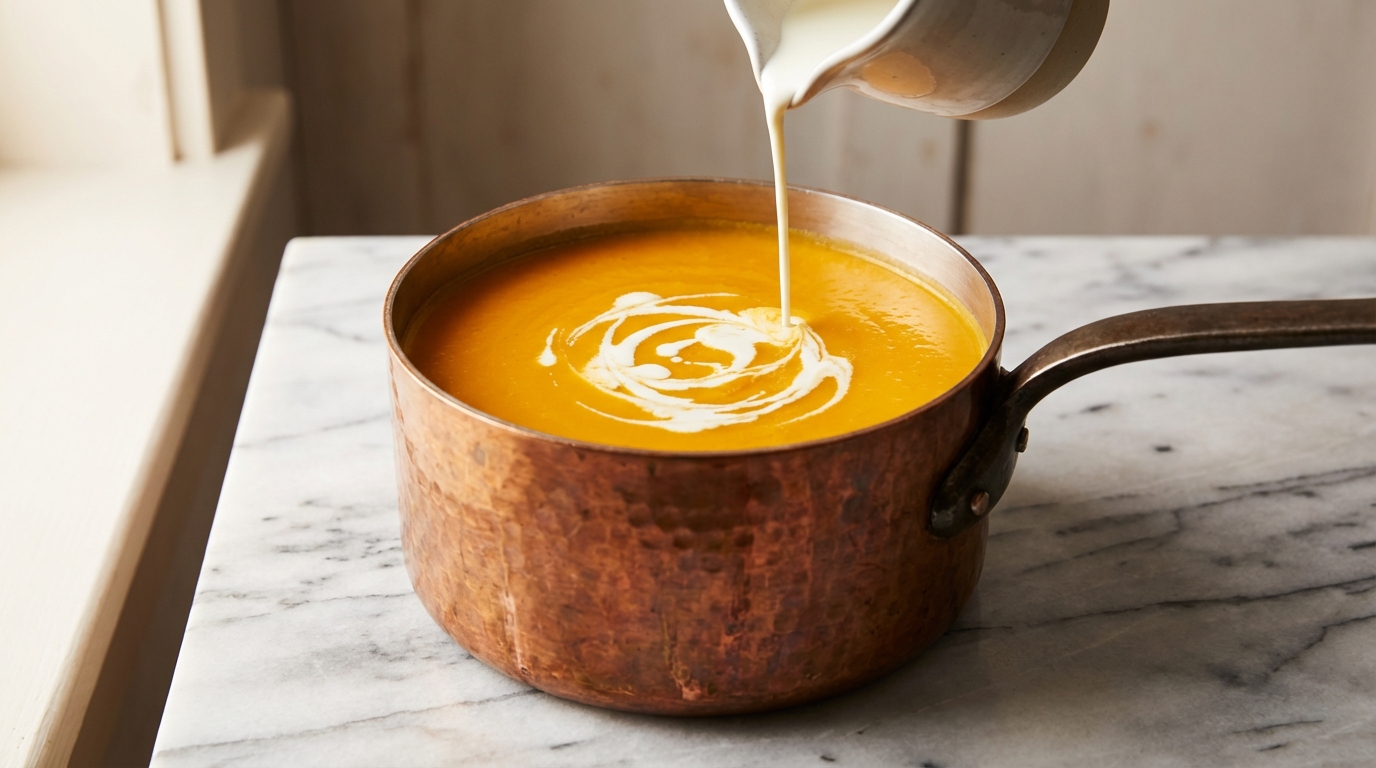
Originating from French fishing villages, a traditional bisque is the epitome of refinement. Historically, it was a way to extract every ounce of flavor from crustaceans—lobster, crab, shrimp, or crayfish. The shells are roasted and simmered to create a potent stock, which is then thickened (traditionally with rice or the shells themselves pulverized into a paste) and finished with heavy cream.
Modern interpretations, such as Roasted Tomato Basil or Butternut Squash bisque, maintain the technique even if they ditch the seafood. The defining characteristic is the finish: a bisque must be puréed until perfectly smooth and often passed through a fine-mesh sieve (chinois) to ensure a texture akin to liquid velvet.
Chowder: Rustic & Hearty
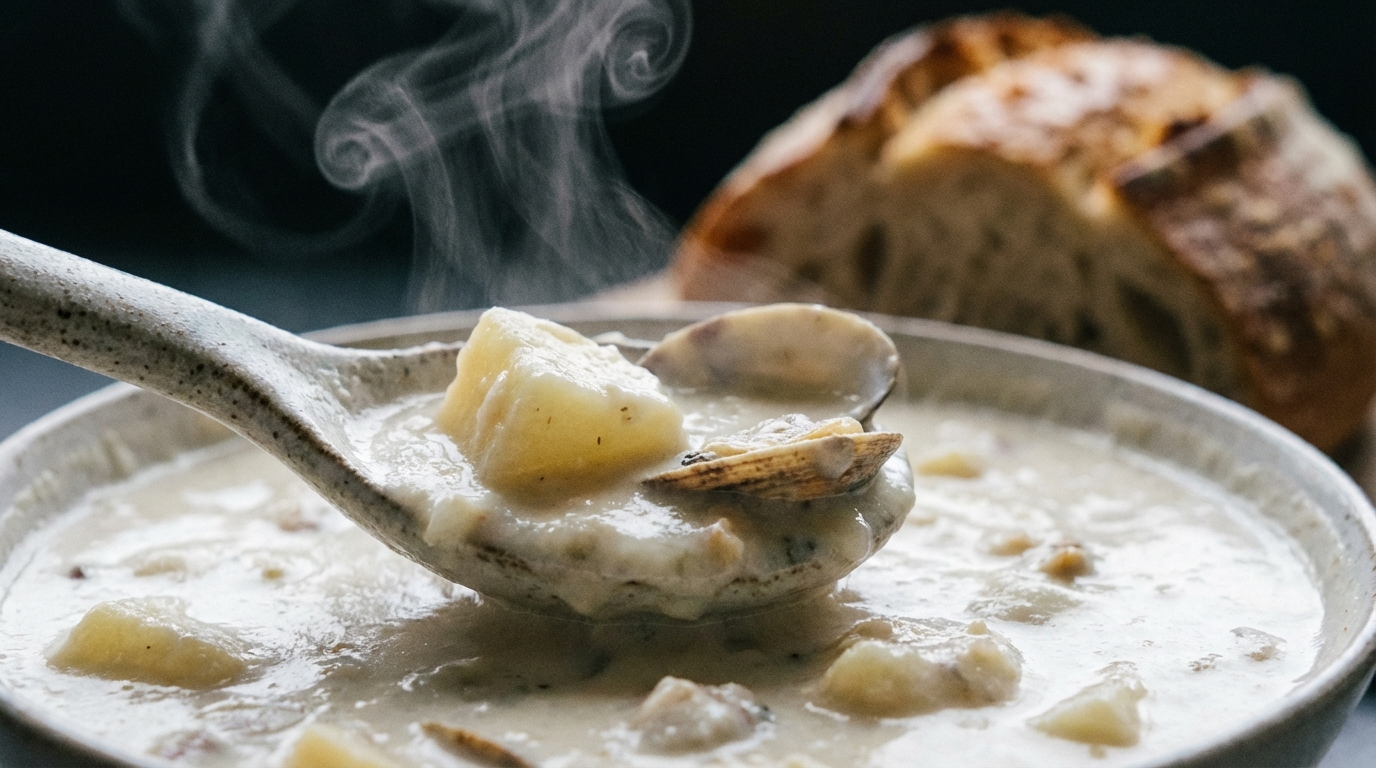
If bisque is a silk gown, chowder is a warm wool sweater. With roots deep in the Northeastern United States and Atlantic fishing communities, chowder is designed to sustain. It is unapologetically chunky.
A proper chowder features distinct bites of its ingredients: cubes of potato, kernels of corn, clams, or chunks of flaky fish. The base is usually thickened with a roux (flour and fat), crushed crackers, or the natural starch of boiling potatoes. While milk or cream is standard (hello, New England), tomato-based variations like Manhattan Clam Chowder prove that "creamy" isn't the only way to chowder.
For those who prefer a plant-based approach, many Hearty Vegetarian & Vegan Stews mimic the chowder style by using coconut milk or cashew cream to achieve that signature thickness without the dairy.
Mastering the Texture
Achieving the perfect consistency is the most challenging aspect of these recipes. A soup that is too thin feels lackluster; one that is too thick can feel like eating paste.
- The Roux Method: Common in chowders, cooking equal parts flour and fat (butter or bacon grease) removes the raw flour taste and provides a stable thickener.
- The Vegetable Puree: For a lighter, more modern bisque, roast cauliflower or potatoes alongside your main ingredient. When blended, they provide creaminess without needing excessive heavy cream.
- Reduction: Simmering your soup gently allows water to evaporate, concentrating flavors and naturally thickening the liquid. This is a technique often used in our Slow Cooker & Instant Pot Favorites to ensure deep flavor profiles.
Flavor Profiles to Explore
While the classics like Clam Chowder and Lobster Bisque are timeless, the format allows for incredible creativity.
1. Roasted Red Pepper & Gouda Bisque
Sweet roasted peppers paired with the smoky notes of Gouda cheese create a sophisticated dipping soup that pairs perfectly with grilled cheese.
2. Smoked Salmon & Corn Chowder
A twist on the classic. The smokiness of the salmon cuts through the sweetness of the corn and cream, offering a complex bite that feels high-end but is surprisingly easy to make.
3. Mushroom & Wild Rice Bisque
Earthy and grounding. By puréeing half the mushrooms and leaving the rest whole, you bridge the gap between bisque and chowder. If you are short on time, many mushroom soups can be adapted from our Quick 30-Minute Weeknight Soups collection by simply adding a splash of sherry and cream at the end.
The Importance of Garnish
In the "Luxury Gold" standard of dining, presentation is everything. Because bisques and chowders are often monochromatic, toppings are essential for visual appeal and textural contrast.
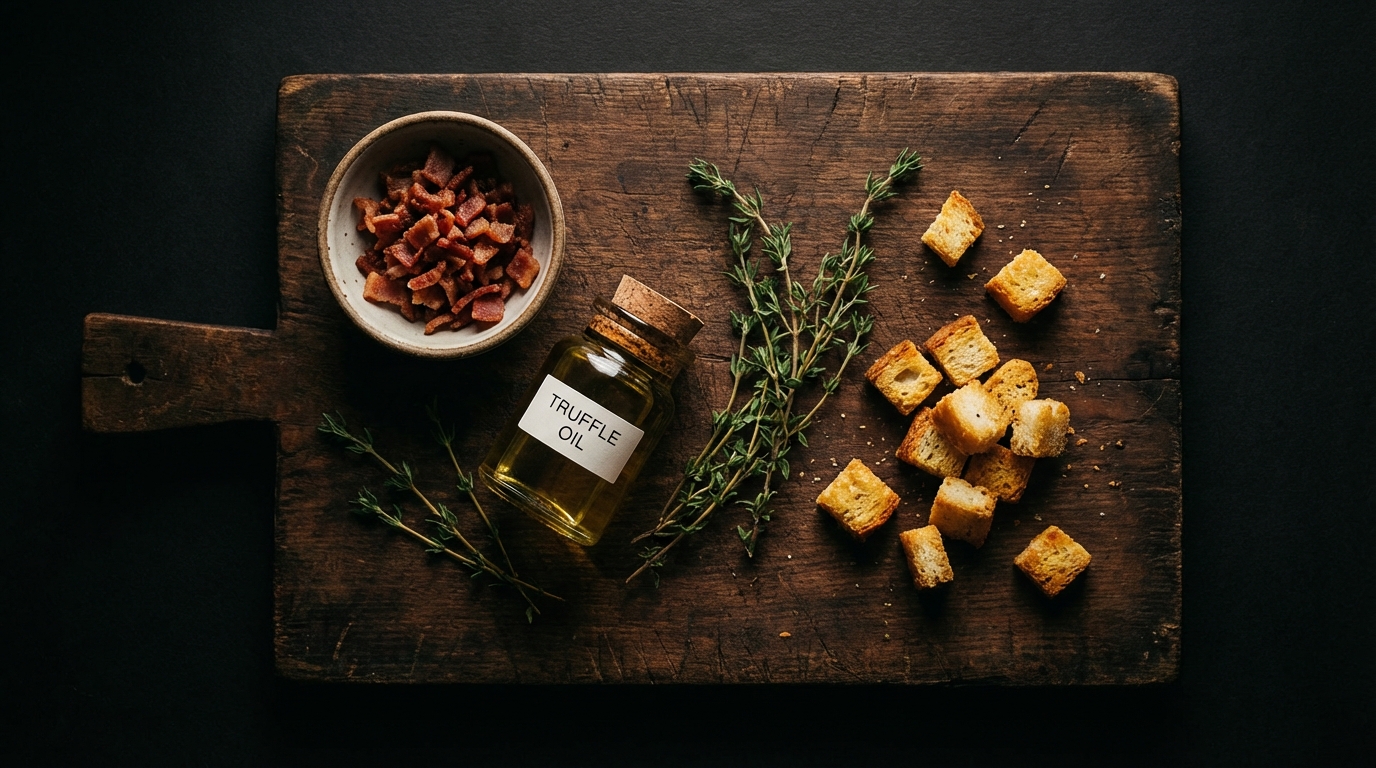
For Bisques: Think delicate. A drizzle of truffle oil, a swirl of crème fraîche, toasted pepitas, or microgreens. The goal is to not disrupt the velvety surface too violently.
For Chowders: Think robust. Oyster crackers are traditional, but consider homemade garlic croutons, crispy bacon lardons, or chopped fresh parsley to cut through the richness.
Conclusion
Whether you are craving the refined elegance of a puréed bisque or the sturdy comfort of a chunky chowder, these creamy soups are the ultimate expression of culinary comfort. They require a bit more patience than a simple broth, but the reward is a meal that feels like a special occasion.
Ready to explore more? Return to our Ultimate Guide to Best Soup Recipes to discover other categories, or perhaps try a lighter option next time with our healing broths.